

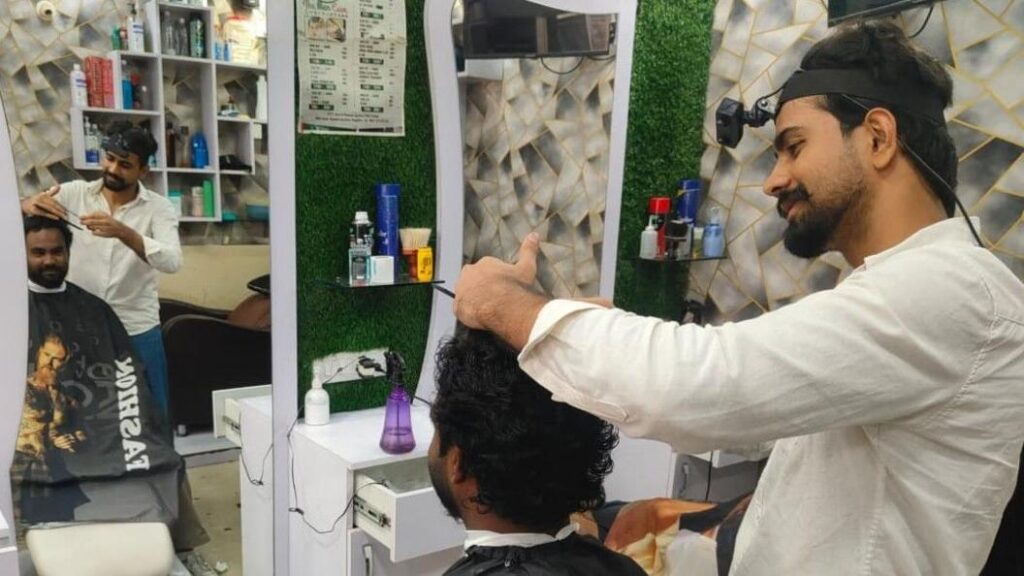
Every morning, Mohammed Ashim laces up, picks up his tools, and straps a lightweight camera to his head. He is 22 years old, has been cutting hair in Bengaluru for four years, and for the past several months, his most important client has not been the man in the chair. It has been a machine learning model somewhere in a server farm, hungry for footage of human hands moving with precision and intent.
Ashim is part of a quietly growing labour force scattered across India and beyond, people whose physical skills, barbering, cooking, assembling, crafting, are being captured on video and sold to technology companies building what the industry calls physical AI. This is not the chatbot variety of artificial intelligence. This is AI designed to move through the real world, to grip, to manoeuvre, to replicate the kind of dexterity that took humans millions of years of evolution to perfect.
What Physical AI Actually Means
When most people think about AI, they picture a text box, a voice assistant, or a recommendation algorithm nudging them toward another streaming binge. Physical AI is an entirely different animal. It refers to systems that control robots or automated machines operating in physical environments, whether that is a surgical robot, a warehouse arm, or a humanoid assistant designed to fold laundry.
Training these systems requires something that no amount of computing power alone can generate: real-world human motion data. The way a skilled barber angles the blade, adjusts pressure, and sequences each movement across a client’s jaw line is deeply complex. Replicating that in a robot requires thousands of hours of high-quality footage, captured under controlled conditions, annotated and packaged for model training.
That is where workers like Ashim come in.
The Rules of the Frame
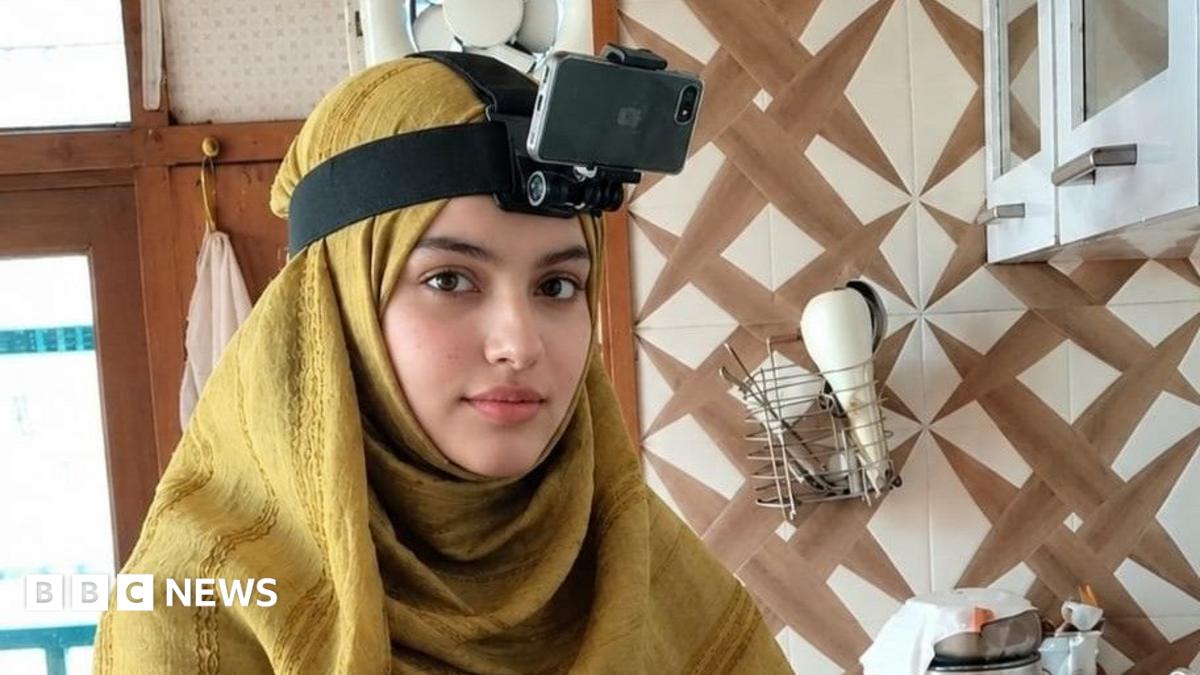
Ashim’s setup sounds deceptively simple. A head-mounted camera films only his hands and fingers as he works. Clients’ faces are automatically blurred to protect privacy. He wears the rig for five or six hours a day, moving through his usual routine while following a strict set of operating protocols laid down by the company that recruited him.
“The operations team taught me that my hands always have to stay cleanly inside the frame, the lighting has to be sharp, and I can’t tilt my head too abruptly while working,” he explained. The footage is not a casual behind-the-scenes reel. It is precision data, gathered with the same discipline one might expect on a film set or a clinical trial.
The local company collecting Ashim’s footage is one of many intermediaries in a growing supply chain. These firms recruit workers, manage equipment, enforce data quality standards, and then sell the curated video libraries to technology companies and research institutions building the next generation of robotic systems.
Hundreds of Thousands of Workers, One Global Dataset
Ashim is far from alone. Estimates suggest that hundreds of thousands of workers around the world are currently paid to film themselves performing everyday tasks. The scale speaks to just how data-hungry physical AI development has become. Language models needed the internet’s worth of text. Physical AI needs the world’s worth of motion, and that means hiring human beings to produce it on demand.
The economic logic is compelling for workers in markets like India, where skilled tradespeople can supplement their income significantly by participating in these programs. For the tech companies on the other end, the cost of sourcing this kind of high-fidelity motion data through human workers is still far cheaper than building synthetic datasets that can actually generalise to messy real-world conditions.
More Than a Paycheck
What is striking about Ashim’s account is not just the practicality of the arrangement. It is the pride. “I never imagined my razor techniques would be useful to a global tech company,” he said. There is something genuinely novel about a barber in Bengaluru contributing to a dataset that might one day train a robot operating in Tokyo, or a surgical assistant working in Toronto.
He frames the work as futuristic, which it objectively is. The idea that a craft passed down through apprenticeship and years of practice could be digitised, packaged, and fed into a neural network to produce machine dexterity is not science fiction. It is happening right now, in barbershops and workshops and kitchens across the developing world.
The Ethical Questions Lurking Beneath the Surface
As with every wave of AI-driven labour, this one arrives with questions worth asking. Who owns the footage once it leaves Ashim’s camera? What happens to the workers if the companies decide to shift to synthetic data generation, cutting out the human middlemen entirely? Are the people being filmed, the clients whose routines and physical presence appear even in blurred form, fully aware of how their data is being used?
These are not hypothetical concerns. The history of AI training data is littered with cases where workers were underpaid, their contributions obscured by layers of corporate abstraction, and their leverage minimal once the data was collected. The workers producing the next frontier of physical AI deserve clearer answers about what their contribution is worth, both now and in the long run.
The Bigger Picture for India’s Tech Economy
India has long been a cornerstone of the global data annotation economy. From labelling images to transcribing audio, Indian workers have powered the invisible backend of AI for years. The shift toward physical AI training represents a natural evolution of that role, one that trades keyboard work for camera rigs and requires skilled professionals rather than generic data entry labour.
For a country with an enormous skilled trades workforce, this could represent a significant economic opportunity. Barbers, welders, mechanics, tailors, people whose expertise has historically been valued only within their local markets, now have a potential global buyer for something they have always possessed: mastery of their craft in motion.
The question is whether that opportunity is structured fairly, or whether it simply recreates the same extractive dynamics that have defined the data annotation industry from the beginning. Mohammed Ashim says the money is good and the feeling is exciting. Both of those things can be true, and the arrangement can still benefit the tech giants far more than the people wearing the cameras.
As robots inch closer to moving like humans, it is worth asking: will the humans who taught them to do it share in what that skill ultimately builds?