

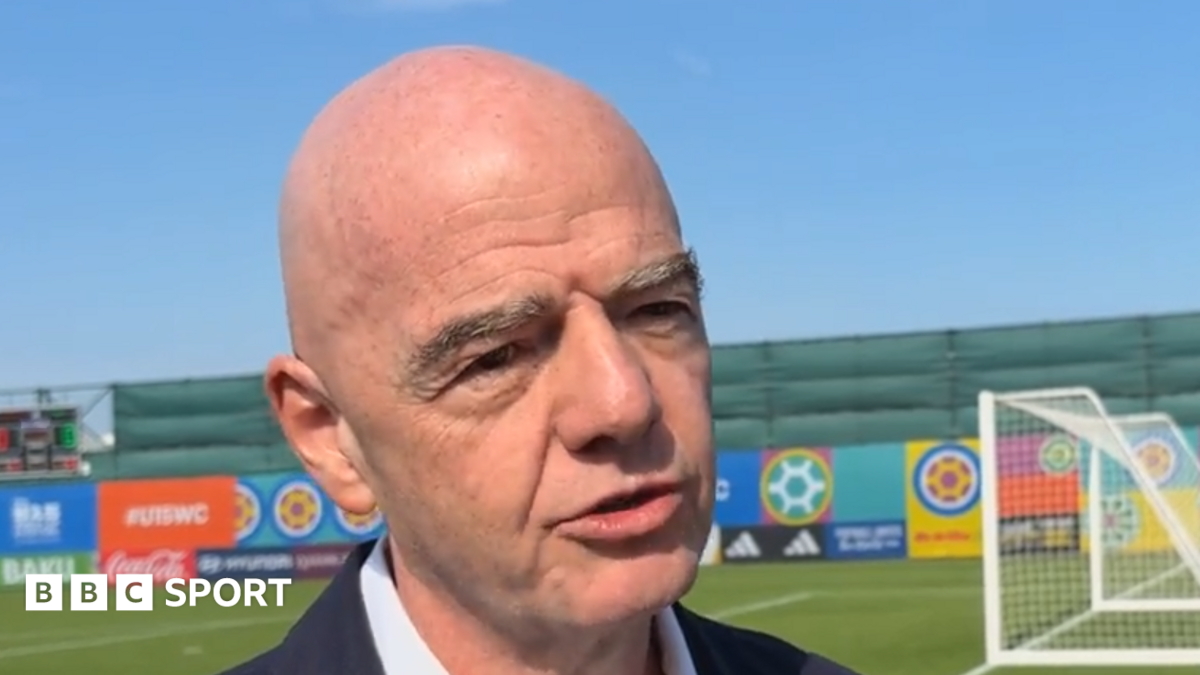
Gianni Infantino was in Baku, the backdrop being the Fifa Under-15 World Cup, when he decided to address the most turbulent chapter of his presidency with something approaching a shrug. The Fifa president, who has led the organization since 2016, told BBC Sport that the “vast, vast majority” of world football stands with him, and greeted questions about whether he had considered stepping down with what can only be described as amusement. For a man who spent much of the past two months under serious institutional pressure, the composure was striking.
A Crisis That Almost Was
Rewind roughly two months and the picture looked considerably less comfortable for Infantino. The controversy at the centre of it all was the Fifa Forward Enterprise proposal, known as FFE, a scheme that would have seen a slice of Fifa’s commercial rights sold off to a private investment firm. The idea landed badly. Very badly.
The heads of Uefa, the Asian Football Confederation, and Concacaf, the body that governs football across North and Central America, collectively signed a letter accusing Infantino of breaking their trust through what they called outright deception. These are not fringe voices. Together, those three confederations represent a commanding portion of global football, financially and politically. The letter was a significant public rebuke, and calls for Infantino to resign began gathering volume.
Infantino scrapped FFE within days of the backlash. But the damage to relationships within football’s power structure was already done, and questions about transparency did not disappear with the proposal itself.
Infantino’s Response: Travel, Money, and Defiance
What happened next says a great deal about how Infantino operates. Rather than retreat or offer extensive public explanations, he went on the road. Morocco, the Dominican Republic, Cape Verde, Japan. He showed up, shook hands, and worked the rooms that matter in football governance. The strategy appears to have worked. Support that looked shaky two months ago has solidified to the point where his re-election to a fourth term as president next year now looks, by most assessments, like a foregone conclusion.
Alongside the travel offensive, Infantino announced a proposal to increase global football development funding by $3.4 billion, which translates to roughly £2.6 billion. For smaller football associations that depend heavily on Fifa’s financial support to build infrastructure, run youth programmes, and keep the game alive at a grassroots level, that number is not abstract. It is transformational. And it is a very effective way of reminding those associations exactly who controls the tap.
The Dissent Has Not Fully Gone Away
Uefa, for its part, has not quietly accepted the outcome. Just last week, the European governing body issued a demand that Fifa release all key documents connected to the FFE proposal by 2 November. Uefa general secretary Theodore Theodoridis stated publicly that Fifa had left several fundamental questions unanswered. That is not the language of an organization that has moved on. It is the language of one that is keeping a paper trail.
Infantino addressed the broader tension in his BBC Sport interview with a kind of philosophical calm. “There is nothing bad in disagreeing,” he said. “We see it every day in so many countries in the world. It’s OK to disagree. It’s OK to have different points of view, but then we need to be able to move on.” It is a reasonable sentiment in isolation. As a response to specific accusations of deception from three major confederations, it is considerably less satisfying.
The Architecture of Loyalty in World Football
What this episode has laid bare is the structural reality of Fifa’s politics. Power within the organization is not distributed equally across its 211 member associations. The confederations representing Europe and the wealthier parts of the game carry enormous institutional weight, but they do not hold a majority of votes. The sheer number of smaller associations, many of which rely directly on Fifa’s development funding, gives any sitting president a durable base if that funding relationship is maintained and expanded.
Infantino has understood this geometry from the beginning of his tenure. His development funding proposal is not just generosity. It is also architecture. A president who increases what member associations receive is a president who becomes very difficult to vote out, regardless of what the Uefa secretariat demands by 2 November.
What Comes Next
The 2 November deadline Uefa has set for Fifa document disclosure will be an important moment. If Fifa complies fully and transparently, it could begin to repair the trust that the FFE episode fractured with European football. If the response is partial or delayed, expect Uefa’s tone to sharpen further. Either way, the re-election campaign for Infantino’s fourth term will play out against a backdrop of unresolved institutional tension, even if the votes to secure that term are already being quietly locked in.
For the casual football fan, all of this governance drama can feel distant from the actual game. But decisions made inside Fifa’s meeting rooms shape everything from how World Cups are awarded, to how much money flows into youth development in countries where the sport is still finding its feet. The FFE episode, whatever its ultimate resolution, served as a reminder that the business of running world football is rarely as clean as the sport itself aspires to be.
Infantino, laughing off resignation questions in Baku, seems utterly certain of his footing. The question worth asking is whether that certainty reflects genuine democratic legitimacy within the game, or simply a system where loyalty can be purchased at scale. Where do you think the line sits between smart political strategy and the kind of governance football’s fans actually deserve?