










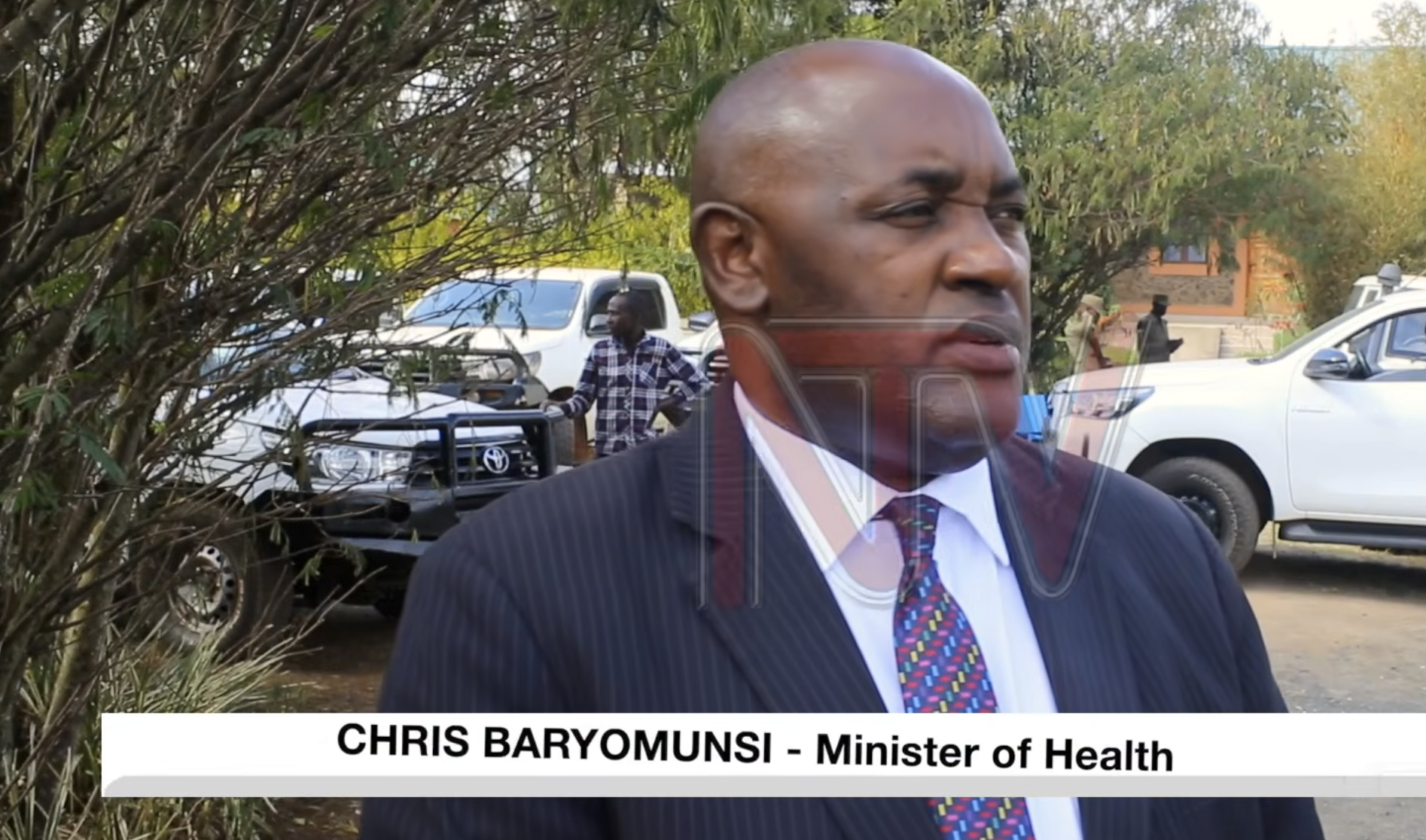
Uganda’s Health Minister Chris Baryomunsi stepped into an increasingly tense public debate this week, calling on anti-corruption agencies operating within the health sector to conduct their work with professionalism and restraint rather than what some health workers have described as needlessly rough and humiliating tactics.
The minister’s remarks came in direct response to growing discontent among health workers who say recent operations targeting suspected misconduct at various health facilities were carried out in a manner that felt more punitive than procedural. Several workers used the word “crude” to describe how suspects were handled during the crackdown, raising uncomfortable questions about where the line sits between legitimate enforcement and public shaming.
A Crackdown That Hit a Raw Nerve
There is no argument from Baryomunsi that corruption in Uganda’s public health facilities is a serious problem. Abuse of office and the theft of drugs, he acknowledged openly, remain widespread challenges that continue to undermine the delivery of healthcare to ordinary Ugandans. On that point, virtually everyone agrees. The dispute is not about whether to fight the vice, but about how.
What appears to have ignited frustration among health workers is the manner in which some recent operations unfolded, with accounts suggesting that individuals were treated in ways that felt degrading before any proper determination of their guilt. In a sector already stretched thin and often working under difficult conditions, that kind of treatment has a corrosive effect on morale, trust, and ultimately, on patient care.
As reported by NTV Uganda, Baryomunsi was unambiguous: enforcement must be thorough, guided by credible evidence, and conducted with a baseline of professionalism. That is not a soft stance on corruption. It is a practical one.
Why Dignity in Enforcement Actually Matters
There is a temptation, particularly in cases involving public resources and vulnerable patients, to treat any show of firmness as a virtue in itself. Cameras rolling, suspects paraded, the optics of decisive action. But enforcement that relies on spectacle rather than substance tends to produce two outcomes: wrongful embarrassment of innocent parties, and a workforce that becomes too afraid or too resentful to function effectively.
Health workers occupy a unique position in any society. They handle life-or-death decisions daily, frequently under-resourced and under-supported. A blanket atmosphere of suspicion, amplified by what workers themselves describe as crude operational methods, risks pushing skilled personnel out of the public health system entirely, which is precisely the outcome Uganda cannot afford.
None of this is to suggest that bad actors should escape accountability. Drug theft from public hospitals is not a victimless administrative slip. It is a direct assault on the health of the most vulnerable citizens, those who depend entirely on public health facilities because private care is simply out of reach. The consequences of missing medicines, diverted supplies, and corrupt procurement ripple outward in ways that are measurable in suffering and sometimes in lives lost.
Professional Standards as a Non-Negotiable
Baryomunsi’s call for evidence-driven operations carries real weight. When enforcement agencies rely on solid, verified evidence before acting, they protect themselves legally, they protect innocent workers from wrongful accusations, and they build a far stronger case for prosecution when genuine wrongdoing is found. Suspicion alone, no matter how strongly held, is not a foundation for treating anyone as already convicted.
This is a principle that holds across all sectors of governance, but it carries particular weight in healthcare, where public trust in institutions is both fragile and essential. A patient who does not trust the health system does not seek care. A health worker who does not trust that the system treats them fairly begins to disengage. Both outcomes are damaging in ways that extend well beyond any individual corruption case.
The Bigger Picture in Uganda’s Health System
Uganda’s public health system has faced persistent structural challenges, from funding gaps and infrastructure deficits to human resource shortages in rural areas. Corruption compounds every one of those challenges. Medicines that are stolen cannot reach patients. Funds that are misappropriated cannot build the facilities or pay the staff the sector desperately needs.
Getting the anti-corruption effort right, therefore, is not a bureaucratic nicety. It is central to whether Uganda’s health infrastructure improves or stagnates. And getting it right means combining zero tolerance for actual wrongdoing with zero tolerance for sloppy, heavy-handed tactics that punish the innocent alongside the guilty.
Baryomunsi’s intervention signals an awareness that the current approach needs recalibration. Whether the agencies involved take that signal seriously, and whether the operational culture shifts accordingly, remains to be seen. Words from a minister carry weight. But sustained change requires institutional follow-through, clear accountability for agencies that overstep, and a process that health workers can trust to be fair even when it is strict.
Where Does the Sector Go From Here?
The coming weeks will likely reveal how seriously enforcement agencies take the minister’s concerns. If operations continue in a manner that health workers find degrading, the complaints will grow louder and the political pressure will intensify. If agencies recalibrate toward the kind of professional, evidence-led approach Baryomunsi is calling for, the broader anti-corruption effort may actually gain credibility rather than losing it.
The goal, ultimately, should be a health sector where public resources reach patients, where genuine wrongdoers face real consequences, and where the vast majority of health workers who show up every day to do an often thankless job are treated with the basic respect that comes with the presumption of innocence.
Uganda can have a tough, effective anti-corruption drive in its health sector without turning it into a public spectacle. The question is whether the agencies carrying out that work are willing to hold themselves to the same standards of conduct they are demanding from everyone else.
So here is something worth sitting with: if the methods used to fight corruption end up eroding trust in the very institutions meant to protect public health, have those methods actually served the public good? Tell us what you think in the comments below.